Compiled by Walter Sorochan
Posted December 28, 2014; updated January 1, 2015; June 28, 2018; Disclaimer
"The US government is not broken; it works the way it is supposed to work!" [Because it is broken]
“We in America do not have government by the majority. We have government by the majority who participate.” Thomas Jefferson
Where do we start to fix a dysfunctional government in United States? How do we do it? This article briefly reviews the historical events of democracy and governing before 1776, then provides documentation of how such events probably influenced two early presidents to project ways of restoring the eroding democracy and their broken governments. Finally, as an example that it can be done, how less than 100 people formed a self- managed community with no government or politicians!
|
Update June 18, 2018: The Big Fix: Our government in Washington has been grid-locked for the passed 20 years. Politicians have not been able to pass any real legislation. Politicians are supposedly elected by their constituents to represent them. But instead of representing the people, politicians get campaign money from corporations to do their bidding . So politicians have been hi-jacked by corporations. The election process is not working. In the past 20 plus years we have had less than 40% of the eligible people voting. We have been electing minority governments. This is not how democracy is supposed to work. We need to fix the election process! America has lost the government of the people, for the people and by the people. We need to fix and restore this! Or look for creative ways to run a country. Otherwise, all attempts to fix health care, fix the infrastructure and other issues will continue to be lip service and a magic TV show. This is what is happening in Washington now. The top priority fix is to fix the political system. We need to fix the political system before we can really fix the health care system, bring the cost of health care down and enhance the wellbeing of all people. This would appear to be an almost impossible task. We need to fix the campaign finance-election funding and get rid of lobbying. We need to completely separate the corporate election funding from politics. Past attempts have not solved the problem. Keep big money out of politics. Can this be done? Yes it can, but we need to re-elect politicians with a strong will for such change. We need to review the suggestions of Adams and Jefferson on how to do this. Instead of politicians debating on campaign election funding, citizens should hold such discussions as town meetings and perhaps consider state campaign voting propositions. Another way to limit the thirst for election funding and cost of elections is to have the election time of one year shortened to two or three months as countries Canada and the United Kingdom do. |
There are a lot of self-appointed experts with biased opinions on how to fix a broken country. But their suggestions are a faint glow in the night, eventuating in not much change! Dees: Large scale change 2014 Clement: Fix economy 2014 Howard: fix legal system 2010 Klein: third party solution 2014 Kotter: Steps for large scale change 2010 However, two politicians from the past [ early 1800's ] perceived future political-economic irregularities in the governing process. Both John Adams [ 2nd president of United States ] and Thomas Jefferson [ 3rd president of United States ], as framers of the constitution and as presidents, struggled with ways to fix the early power struggles and political manipulations of the governing system during their presidencies. They proposed clear visions for preventing and changing a sick government and country.
|
"John Adams Letter to Jonathan Jackson, October 2, 1789: There is nothing which I dread so much as a division of the republic into two great parties [cabals], each arranged under its leader, and concerting measures in opposition to each other. This, in my humble apprehension, is to be dreaded as the greatest political evil..." Rosenburg: Jefferson restoring republic 2014 "John Adams' Letter to Thomas Jefferson, November 13, 1815: The fundamental article of my political creed is that despotism, or unlimited sovereignty, or absolute power, is the same in a majority of a popular assembly, an aristocratical council, an oligarchical junta, and a single emperor. Equally arbitrary, cruel, bloody, and in every respect diabolical." Rosenburg: Jefferson restoring republic 2014 Jefferson's – Letter to Henry Lee (10 August 1824): "Men by their constitutions are naturally divided into two parties: 1. Those who fear and distrust the people, and wish to draw all powers from them into the hands of the higher classes. 2. Those who identify themselves with the people, have confidence in them, cherish and consider them as the most honest and safe, although not the most wise depositary of the public interests. In every country these two parties exist, and in every one where they are free to think, speak, and write, they will declare themselves. Call them, therefore, liberals and serviles, Jacobins and Ultras, whigs and tories, republicans and federalists, aristocrats and democrats, or by whatever name you please, they are the same parties still and pursue the same object. The last appellation of aristocrats and democrats is the true one expressing the essence of all." More quotes |
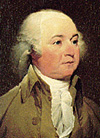 John Adams
Plan: avoid a political power struggle by
abolishing political parties so these would not exist:
John Adams
Plan: avoid a political power struggle by
abolishing political parties so these would not exist: |
 Divide the entire country into 100-person units or wards with full self-governing powers. These units can then delegate some of their powers to larger governmental bodies, or not. The tiny size of these units would ensure that every person in the country knew his or her local representative… as in, “can
knock on their door and complain to their face.” Divide the entire country into 100-person units or wards with full self-governing powers. These units can then delegate some of their powers to larger governmental bodies, or not. The tiny size of these units would ensure that every person in the country knew his or her local representative… as in, “can
knock on their door and complain to their face.” |
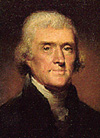 Jefferson’s plan to restore a faltering republic was:
Key concepts: 1. vote for the individual and not the political party.
Implementing both of these proposals would be one of the greatest challenges of our time. Most thinking on fixing the broken government today is politically-economically oriented, empty and static! But in spite of empty 'do nothing' thinking by politicians, academic institutions and businesses, these are very exiting ideas to fix the broken government in Washington. This article briefly accounts for Jefferson's impact thinking on the world, captures the innovative thinking of many persons and recognizes ways to fix the USA without a civil military war!
Unfortunately, although it is acknowledged that the country and democracy are broken, identifying the cause of the problem(s) has been ignored and misunderstood.
The current thinking is to blame 'politics' for many components of a broken system. For example:
"The real problem with American politics is the growing tendency among politicians to pursue victory above all else—to treat politics as war—which runs counter to basic democratic values and may be crippling Washington’s ability to reach solutions that capture the smartest thinking of both camps. Revitalizing the nation’s culture of democracy is essential. And because the economic stakes are so high, business leaders must play an important role in the process." Moss: Fixing USA politics 2012
Another point of view, also blaming politics for USA problems is: "The most serious challenges in the country — entitlement spending, climate change, immigration, foreign policy conflagrations in the Middle East and elsewhere — are getting steadily worse." Wheelan: Fixing US politics 2014
And such approaches get us "stuck in the mud!" Washington gets paralyzed!
Most readers may be more anxious to view the "Fix" first and thereafter view the evidence that USA is a broken country. This article unfolds with the 'fix America' ideas of Howard and Rosenburg's overview of Jefferson's fix.

 "So,
what's needed is a basic shift in philosophy. [
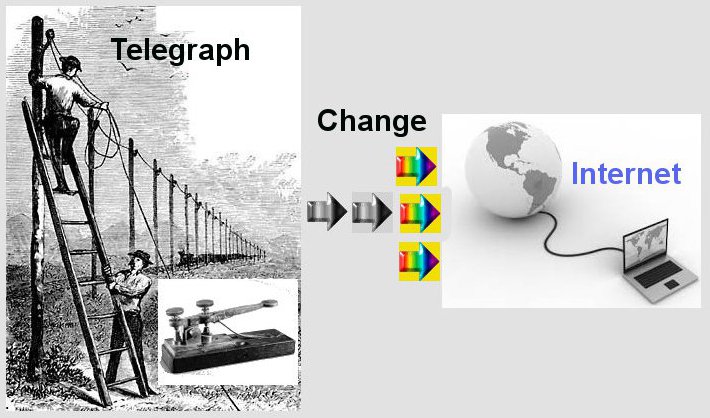
Author Sorochan insertion: We need to adapt to new changes and thinking out of the
existing box. The illustration on the right
reminds us of how we changed in thinking as communication technology advanced from the
telephone lines to today's internet. Similarly, we
can pull the plug on a lot of today's government politics if we shift our philosophy
or way of thinking.]
For
example: "We've
been taught that authority is the enemy of freedom.
It's
not true. Authority, in fact,
is
essential to freedom.
Law
is a human institution;
responsibility is a human institution.
If
teachers don't have authority to run the classroom,
to
maintain order, everybody's learning suffers.
If
the judge doesn't have the authority to toss out unreasonable claims,
then
all of us go through the day looking over our shoulders.
If
the environmental agency can't decide
that
the power lines are good for the environment,
then
there's no way to bring the power from the wind farms
to
the city.
A
free society requires red lights and green lights,
otherwise it soon descends into gridlock.
That's what's happened to America. Look around."
Howard: fix legal system 2010
"So,
what's needed is a basic shift in philosophy. [
Author Sorochan insertion: We need to adapt to new changes and thinking out of the
existing box. The illustration on the right
reminds us of how we changed in thinking as communication technology advanced from the
telephone lines to today's internet. Similarly, we
can pull the plug on a lot of today's government politics if we shift our philosophy
or way of thinking.]
For
example: "We've
been taught that authority is the enemy of freedom.
It's
not true. Authority, in fact,
is
essential to freedom.
Law
is a human institution;
responsibility is a human institution.
If
teachers don't have authority to run the classroom,
to
maintain order, everybody's learning suffers.
If
the judge doesn't have the authority to toss out unreasonable claims,
then
all of us go through the day looking over our shoulders.
If
the environmental agency can't decide
that
the power lines are good for the environment,
then
there's no way to bring the power from the wind farms
to
the city.
A
free society requires red lights and green lights,
otherwise it soon descends into gridlock.
That's what's happened to America. Look around."
Howard: fix legal system 2010
Jefferson's proposal: Several letters by Jefferson summarize his way of fixing a government that was in its infancy but already sputtering and dysfunctional. [ Although somewhat lengthy, author Sorochan perceived it important that you, the reader, have the details of Jefferson's ideas .... and judge for yourself the merits of Jefferson's ideas.]
"This is a letter from Thomas Jefferson to John Tyler, dated May 26, 1810: I have indeed two great measures at heart, without which no republic can maintain itself in strength. 1. That of general education to enable every man to judge for himself what will secure or endanger his freedom. 2. To divide every county into hundreds, of such size that all the children of each will be within reach of a central school in it. … Every hundred, besides a school, should have a justice of the peace, a constable, and a captain of its militia. These officers, or some others within the hundred, should be a corporation to manage all its concerns, to take care of its roads, its poor, and its police by patrols, etc.… Every hundred should elect one or two jurors to serve where requisite, and all other elections should be made in the hundreds separately, and the votes of all the hundreds be brought together. … These little republics would be the main strength of the great one. We owe to them the vigor given to our revolution in its commencement … General orders are given out from a center to the Foreman of every hundred … Could I once see this I should consider it as the dawn of the salvation of the republic. … " Rosenburg: Jefferson restoring republic 2014 Hoyt: Flaw in Jefferson's wards 2014
"Jefferson repeats essentially the same plan to Samuel Kercheval in 1816: The article, nearest my heart, is the division of counties into wards. These will be pure and elementary republics, the sum of all which, taken together, composes the State, and will make a true democracy as to the business of the wards, which is that of nearest and daily concern. The division into wards … enables them by that organization to crush, regularly and peaceably, the usurpations of their unfaithful agents, and rescues them from the dreadful necessity of doing it insurrectionally. In this way we shall be as republican as a large society can be, and secure the continuance of purity in our government, through salutary, peaceable, and regular control by the people. Jefferson’s plan, in simple terms, is this: 1. Divide the entire country into 100-person units with full self-governing powers. 2. These units can then delegate some of their powers to larger governmental bodies, or not. 3. The tiny size of these units would ensure that every person in the country knew his or her local representative… as in, “can knock on their door and complain to their face.” Rosenburg: Jefferson restoring republic 2014
Jefferson's 100 unit size of 1820's needs to be adjusted to today's 1000 [or smaller]: The hundreds is what we would call a standard 1000-person (200 family) voting district/neighborhood government today. Remember, in Jefferson's time families were larger, so a hundred families in the ward in 1800 would be equal to 1000 adults today. Population shifts from the farm to the city complicate Jefferson's idea of small representative units. Adopting the 100-unit size today would need to be scaled to account for differences between rural and urban populations and technological changes.
It would be appropriate to take a 'time-out' from Adams and Jefferson plans to fix the problems of United States. To fully appreciate their fixer plans, we need to have a very brief appreciation of how democracy, justice and government evolved in the world. America did not invent democracy! We begin with the ideas of ancient Greece.
Greek early decentralization of government was Pre-Athenian, polis-based Greece featured a pattern of small, equally sized and therefore equally influential land parcels (read “sections”) which were owned (and defended) by the same yeoman farmers who tended the figs, leeks, olives, and grapes growing on them, and when new land was appropriated by polis-era Greeks (claimed from wilderness-status) it tended to be divided up into small, eleven-acre rectangles in such a way as to form a grid, thereby reinforcing egalitarianism to the same degree that Jefferson’s grid eventually did. Hoyt: Flaw in Jefferson's wards 2014
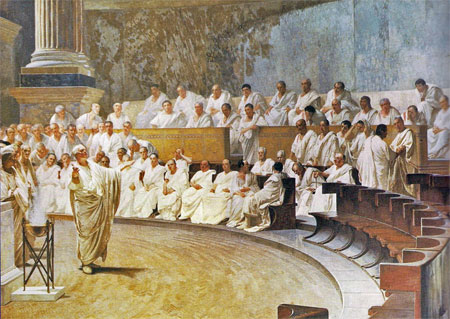 Athenian democracy took the form of a direct democracy, and it had two
distinguishing features: the random selection of ordinary citizens to fill the
few existing government administrative and judicial offices, and a legislative
assembly consisting of all Athenian citizens. All eligible citizens were allowed to speak and vote in the assembly, which set the laws of the city state. However, Athenian citizenship excluded women, slaves, foreigners (μέτοικοι métoikoi), non-landowners, and males under 20 years old.
Wiki: Democracy
Athenian democracy took the form of a direct democracy, and it had two
distinguishing features: the random selection of ordinary citizens to fill the
few existing government administrative and judicial offices, and a legislative
assembly consisting of all Athenian citizens. All eligible citizens were allowed to speak and vote in the assembly, which set the laws of the city state. However, Athenian citizenship excluded women, slaves, foreigners (μέτοικοι métoikoi), non-landowners, and males under 20 years old.
Wiki: Democracy
Range voting appeared in Sparta as early as 700 BC. The Apella was an assembly of the people, held once a month, in which every male citizen of age 30 could participate. In the Apella, Spartans elected leaders and cast votes by range voting and shouting. Aristotle called this "childish," as compared with the stone voting ballots used by the Athenians. Sparta adopted it because of its simplicity, and to prevent any bias voting, buying, or cheating that was predominant in the early democratic elections. Wiki: Democracy
In ancient times the idea of a democracy meant that the community would be run by meetings and attended by every citizen. After examining the facts and discussing what needed to be done, the people would make the laws, decide every act of government policy and judge every dispute that arose in the community.
Although there is debate over how big a unit or ward should be today in acreage and population, there is historical and anthropological support for Jefferson's small size representative units:
England and the Magna Carta: The history of local government in England is one of gradual change and evolution since the Middle Age. Another form of government, known as feudalism developed before 1776. Feudalism stressed that all people had certain rights and developed a system of courts to defend these rights.
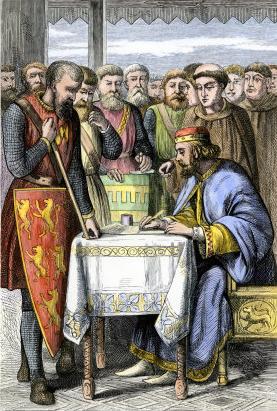 In medieval England, in 1215, King John had total control and his subjects had
no freedom or say whatsoever.
King John signed the Charter of Freedoms
[Magna Carta], and gave rise to democracy [ picture on right ].
The Magna Carta limited the power of the king over church and nobility.
It also established the Council of Nobles and the beginning of parliament. It took some of the king's power away
and gave some rights and freedom to the people.
In medieval England, in 1215, King John had total control and his subjects had
no freedom or say whatsoever.
King John signed the Charter of Freedoms
[Magna Carta], and gave rise to democracy [ picture on right ].
The Magna Carta limited the power of the king over church and nobility.
It also established the Council of Nobles and the beginning of parliament. It took some of the king's power away
and gave some rights and freedom to the people.
The Magna Carta is a historical document that means 'Great Charter' (great paper) in Latin. It was written by the barons of England who were unhappy that the king was abusing his power and increasing taxes.
The Magna Carta contained 63 clauses promising all freemen access to the courts and a fair trial, eliminating unfair fines and punishments and giving power to the Catholic Church in England instead of the king.
The Magna Carta was an important milestone in British Law and would become the basis for many international constitutions in the future, including the United States.
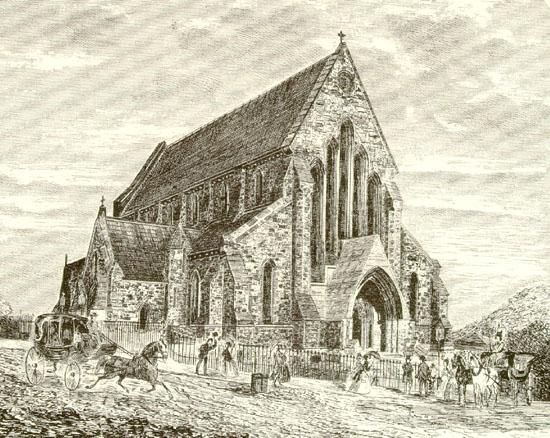 Christianity and Church of England: Christianity and the Church of
England [ picture on right ] gained popularity during feudalism by providing services that the King
did not or would not. Rural areas were organized into smaller units called
parishes. Although the parishes were in no sense governmental organizations, laws were passed requiring parishes to carry out certain responsibilities. From 1555, parishes were responsible for the upkeep of nearby roads. From 1605 parishes were responsible for administering the Poor Law, and were required to collect money for their own poor. The parishes were run by parish councils
that worked from churches that were subservient to higher authority.
Hoyt: Flaw in Jefferson's wards 2014
The Church of England gained power from the crown during feudalism; this power
eventually resulted in political fighting between the royal crown, the British
Commons and the church.
Christianity taught that all men were created equal. An important point
to be made here is that small 'parish' units may have
enforced Jefferson's idea of small community units and democracy. Wiki: History of English government
Christianity and Church of England: Christianity and the Church of
England [ picture on right ] gained popularity during feudalism by providing services that the King
did not or would not. Rural areas were organized into smaller units called
parishes. Although the parishes were in no sense governmental organizations, laws were passed requiring parishes to carry out certain responsibilities. From 1555, parishes were responsible for the upkeep of nearby roads. From 1605 parishes were responsible for administering the Poor Law, and were required to collect money for their own poor. The parishes were run by parish councils
that worked from churches that were subservient to higher authority.
Hoyt: Flaw in Jefferson's wards 2014
The Church of England gained power from the crown during feudalism; this power
eventually resulted in political fighting between the royal crown, the British
Commons and the church.
Christianity taught that all men were created equal. An important point
to be made here is that small 'parish' units may have
enforced Jefferson's idea of small community units and democracy. Wiki: History of English government
Meanwhile on the North American continent, native Indian tribes banded together into tribal units and evolved their own codes of social justice and freedom.
Native Indian tribe size: Pre-colonial native tribes in North and South America evolved as small manageable units.
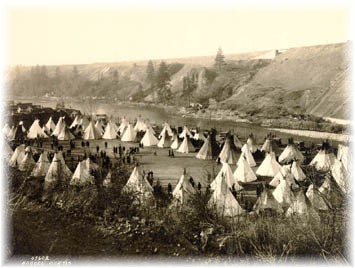
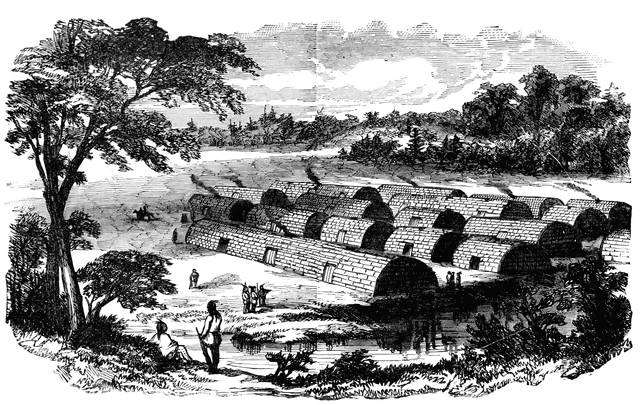
Early colonial reports state that the population size of North American Indian villages was usually small. This is illustrated by the wigwam village and Manhattan-Island tribe camp above. Tribes were known to historically divide into smaller chieftain units so as to be more manageable and efficient to govern. A normal Cherokee town had about 30 - 60 houses and a large meeting building. Jefferson may have evolved his small units idea from observing such villages and how Indian tribes functioned. Another example of small village size are those found in the Amazon River rain forest area; tribe size is usually small due to the size of available dry land area.
Jefferson's 100 units in world: It should be obvious by now that the ideas of Adams and Jefferson were not new. Their ideas sprouted from the influence of ancient civilizations like the Greeks, the English system of government and even the lifestyles of native American Indians. It should be noted that today we already have traces of some ideas of Adam and Jefferson already in place in different parts of United States and the world. But these may not be recognized as being related to these fathers of the constitution and these may need tweaking to make them work.
Brazil: About 1800, Brazil began succeeding from Portugal and evolving its own constitution. Numerous leaders, among them, Jose Joaquim de Maia, had visited Thomas Jefferson in France, asking for American help in doing so. In that sense, the recurrent American idea that taxation without representation is tyranny had its moment in Brazil. In 1822, Brazil achieved its political freedom from Portugal and the first draft of the constitution was implemented in 1824. Jefferson's sharing of ideas, not advice, had given birth to Brazil!
Early Land Policy in United States: After the Constitution, Jefferson pushed his anti-urban policy in the Land Ordinance of 1785. This is the classic land policy that divided land in what is now the Midwest into six square mile townships, divided into 640 acre sections. Jefferson and his friends imagined that each section would become used for farming, except for one section that would be reserved for public education. Today, the local recorder’s office in each state records the location of a certain tract; all you need to know are its section, range, and township numbers, relative to the ruling meridian and baseline axes in that geographical region. Hoyt: Flaw in Jefferson's wards 2014
| President Lincoln's view on Power and Corporations: "Like the founders, and especially Jefferson, Lincoln understood that a subdued government lacking in regulatory power would invite a tyranny far worse than anything which could arise under our deliberately incorruptible system of checks and balances:" The money powers prey upon the nation in times of peace and conspire against it in times of adversity. The banking powers are more despotic than a monarchy, more insolent than autocracy, more selfish than bureaucracy. They denounce as public enemies all who question their methods or throw light upon their crimes. I have two great enemies, the Southern Army in front of me and the bankers in the rear. Of the two, the one at my rear is my greatest foe. Lincoln held off the southern army, but not the corporate artillery." Clutchy: Founding fathers not libertirians 2011 |
Although there is debate over how big a unit or ward should be today in acreage and population, there is anthropological support for Jefferson's small size units:
Anthropological support for Jefferson's small people units. British anthropologist Robin Dunbar's research in 1990 found a correlation between primate brain size and average social group size. Dunbar suggested that there is cognitive limit to the number of people with whom one can maintain stable social relationships. These are relationships in which an individual knows who each person is and how each person relates to every other person. By using the average human brain size and extrapolating from the results of primates, he proposed that humans can only comfortably maintain 150 stable relationships. Proponents assert that numbers larger than this generally require more restrictive rules, laws, and enforced norms to maintain a stable, cohesive group. It has been proposed to lie between 100 and 250, with a commonly used value of 150. Wiki: Dunbar's numbers
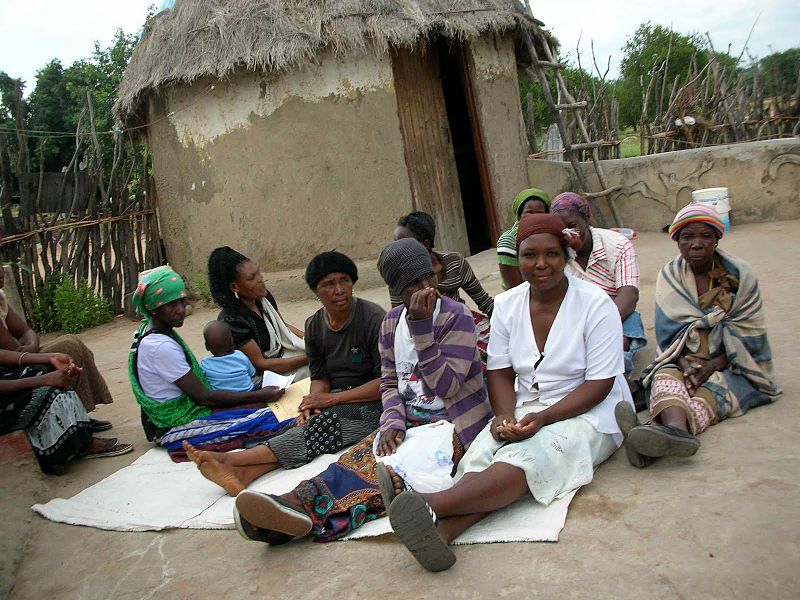
The main features of microfinance are: Wiki: Microfinance
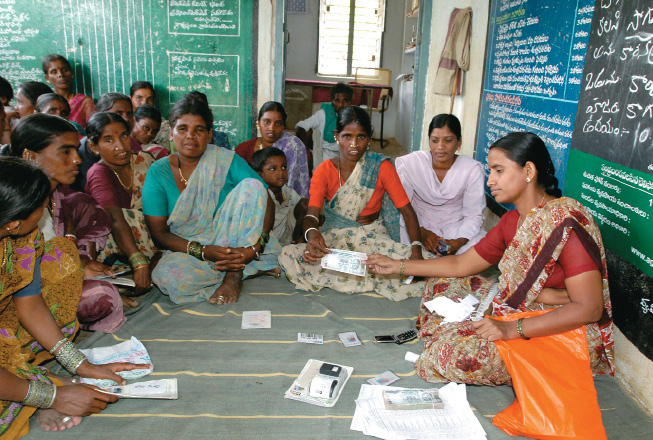 Micro-credit is similar to microfinancing. It was developed as an innovative response to the lack of capital for poor families; leveraging a combination of social credit
[ people knowing people in the community ] and micro enterprise initiatives [ small enterprises that could generate a livelihood
]. And this form of credit is most relevant for low-income individuals who typically do not have access to banking services. The general belief was that low-income individuals are capable of overcoming poverty if given access to this type of credit.
Micro-credit is similar to microfinancing. It was developed as an innovative response to the lack of capital for poor families; leveraging a combination of social credit
[ people knowing people in the community ] and micro enterprise initiatives [ small enterprises that could generate a livelihood
]. And this form of credit is most relevant for low-income individuals who typically do not have access to banking services. The general belief was that low-income individuals are capable of overcoming poverty if given access to this type of credit.
There are many variations of how microfinance works. One such example is that a group of women in a village banding together for support. They save money as a credit fund that is made available to them to start a mini home business. They know each other. The group monitors on a daily basis how the borrower manages her business. Another woman may not be able to get a loan until a previous borrower has repaid her loan.
Justice Brandois on big government and corporations: Former Chief Justice Brandeis' views of American politics were very similar to that of Jefferson. Brandeis has been the most important American critic of bigness, in business and government; and his views about the need for citizens to achieve their potential in small-scale communities reflected his own upbringing and background. During the past hundred years, The New Republic magazine has continued to champion the principles that made Brandeis the greatest constitutional philosopher of the twentieth century: opposition to the curse of bigness, in corporations and government; devotion to judicial restraint in cases involving economic regulations; judicial vigilance in cases involving free speech and civil liberties; and an enthusiasm for Zionism. Brandeis was a lawyer of the people! Urofsky: Brandeois copies Jefferson
Libertarian party format: Jefferson's modernization of hundreds and town-hall governance has had a big impact on a political system form of what Libertarians call mini-anarchism or traditional anarchism. www.isil.org had a presentation on the subject to world pro-libs several years ago at the world brainstorming event. For more on the world Libertarian movement see http://www.libertarianinternat... the Libertarian International Organization. The Libertarian International above announced it has at least one libertarian-oriented family in about every such district on Earth. So the Jeffersonian movement is underway.
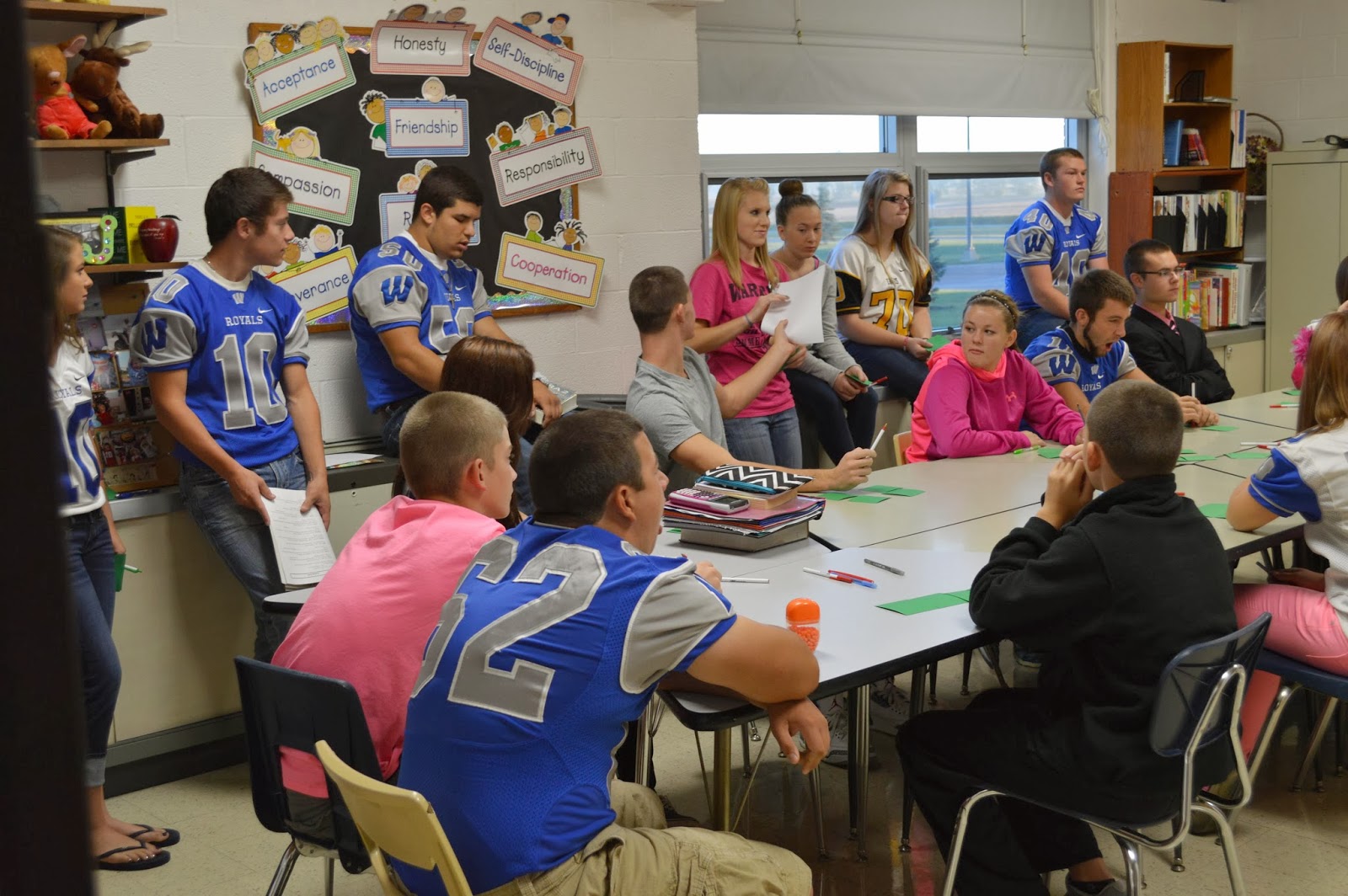 Examples in USA
today:
Examples in USA
today:
High school government: Many high school student governments come very close in resembling Jefferson's concept of a class representative elected to the student council. The class size is about 30 to 40 students, smaller than Jefferson's 100 unit size but nevertheless a direct voter representation. Then there are city councils that are made up of district units much larger than the 100 unit. Another example is the makeup of school boards. These examples are a semblance of the 100 unit with the size variation. So if one were to implement Jefferson's ideas .... these examples may be an obvious place to start. Oh .... lets not overlook Jefferson's plea to have 'uncensored' history taught in all schools! For democracy to work, we need an informed and uncensored public.
Newport City Fire Department, Virginia: decentralizing its fire department [372 fire fighters] response to a 78 square mile community of 185,000 citizens.
Decentralized energy generation [DEG] is a promising solution for supplying the increasing energy demand, especially on islands [Croatian Islands], remote regions and small communities. Installation of DEG near the place of energy consumption represents a platform for achieving the efficient energy use and thus contributing to the sustainable energy development.
Florida development of modern condo rules: The ownership of building units is an indirect spin-off of Jefferson's 100 units which divide land horizontally. However, there was debate in Europe prior to 1800 over who owned rooms in a multi-storied building situated vertically above land. It was an issue of ownership of space below and above the surface of the land. The model for American statutes on condominium law came not from Europe, but from Puerto Rico. A major housing shortage, along with the high cost of real estate and a shortage of land in Puerto Rico, led to the approval of the condominium form of homeownership in 1951. A more detailed version of the act, approved in 1958, was the Horizontal Property Act provides a statutory method of subdividing the space occupied by a building into horizontal strata or layers. The Horizontal Property Act of Puerto Rico gave impetus to the condominium [units] movement in America and became the model for much of the legislation approved in the various states. Recognition of the condominium form of property ownership became part of the 1961 National Housing Act.
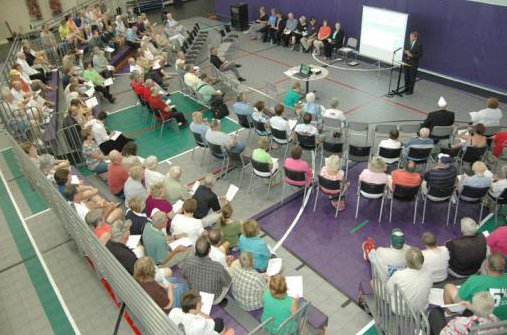 New England town hall meetings:
Jefferson's modernization of small size and town-hall governance is popular
in the new England states. Town hall meetings bring local people immediate
access to discuss their local community problems and ways of fixing their
problems. People participate directly in local government.
New England town hall meetings:
Jefferson's modernization of small size and town-hall governance is popular
in the new England states. Town hall meetings bring local people immediate
access to discuss their local community problems and ways of fixing their
problems. People participate directly in local government.
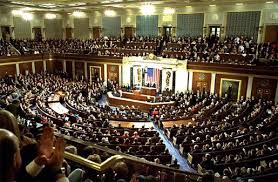 US Government reform: A more refreshing approach
would be to focus on the system of democracy
[ no consensus on definition ] and government. How
about fixing the issue of representation, unit size, gerrymandering, redefining
a corporation, the justice-legal system, the process of how we vote, fix the
national debt and even scrutinizing how the
constitution may be amended!
US Government reform: A more refreshing approach
would be to focus on the system of democracy
[ no consensus on definition ] and government. How
about fixing the issue of representation, unit size, gerrymandering, redefining
a corporation, the justice-legal system, the process of how we vote, fix the
national debt and even scrutinizing how the
constitution may be amended!
Jury: Jefferson's concept of a jury and how it would work was very different from the jury of today! A jury is a tribune of the people [or country]. Being randomly selected, the jurors are to be independent of the government and thus bear no vested interest in the same. Further, they are representative of the full range of views, morality and common sense that exist among the people. Today, it is assumed that a jury would be chosen from the people and not be influenced by the local police or government; but this assumption is often flawed.
Voting: The process of voting was perceived by Adams in his day as flawed. Today, a voter falls through the cracks and is unrecognized by today's politicians. Voting is assumed to give the voter representation of his choice of rights that would transcend to the next level of representative government. But such a process is debated and perceived as being broken by Jefferson and others. Here are two such examples:
"When a person is empowered to control his own destiny at the local level, “he feels that he is a participator in the government of affairs not merely at an election, one day in the year, but every day.” Such a person will defend his liberty; “he will let the heart be torn out of his body, sooner than his power be wrested from him by a Caesar or a Bonaparte.” Smith: Jefferson on education 2012
By 1879 Hubert Spencer was convinced that voting was not a very good way to preserve our rights but rather a means to put ourselves “in bondage” to the state:
"… the acquirement of so-called political rights is by no means equivalent to the acquirement of rights properly so-called. The one is but an instrumentality for the obtainment and maintenance of the other; and it may or may not be used to achieve those ends. The essential question is–How are rights, properly so-called, to be preserved–defended against aggressors, foreign and domestic? This or that system of government is but a system of appliances. Government by representation is one of these systems of appliances; and the choosing of representatives by the votes of all citizens is one of various ways in which a representative government may be formed. Hence voting being simply a method of creating an appliance for the preservation of rights, the question is whether universal possession of votes conduces to creation of the best appliance for preservation of rights. We have seen above that it does not effectually secure this end; and we shall hereafter see that under existing conditions it is not likely to secure it." Spencer on voting
Voting and representative governments were thus in Spencer's view such rights protecting “appliances.” Unfortunately, the way in which voting and representative governments had evolved in Britain, France, and the United States by 1880 had shown that they were fast losing their original purpose of protecting rights and were becoming new forms of statism designed to violate the rights of the many for the benefit of a ruling few. Spencer particularly mentioned the U.S. in this regard with its corruption of local government by “wirepullers” and political “bosses,” the enacting of “blue laws”, and the imposition of tariffs.
Evidence that USA is broken: The defenders of 'politics as usual' may be skeptical of the reform ideas or that the American democracy needs to be fixed. However, there are plenty of informed and astute observers who think otherwise. The list includes:
- David Stockman, former Congressman and Director of the Office of Management and Budget under Ronald Reagan.
- Reclaim democracy
- Fareed Zakaria is Editor of Newsweek International
- Joseph Stiglitz is a Nobel Laureate in Economics and Professor of Finance and Economics at Columbia University. He was chief economist at the World Bank and a senior economic adviser to President Clinton.
- Ralph Nader: Bold ideas to fix America
- Fixing economic meltdown
- Decline in US dollars
- Congressman Ron Paul
- Congressional Report 2011
- Articles on a flawed democracy
- Cost effective medical care system solution for United States
- Nutrition information often not scientifically data based
- FDA corruption letter
- Pharmaceutical Monopoly versus Free Market
- Truth about drug companies by Marcia Angell MD and editor in chief of NEJM, 1999
- Obesity and food addiction
- Sugar addiction & health
This is an incomplete list but it makes the point that there are a lot of informed persons pointing out that the United States government and political-economic-social system is broken. Many readers will be skeptical that attempts to fix a broken government can work!
So .... is there any evidence that bringing about large scale change in a government or country can work? Yes there is! Despite this growing interest, relatively little evidence-based guidance exists about how to bring about large-scale change.
The second half of the twentieth century witnessed the end of European colonial empires and the rise to independence of many new countries in Africa and Asia, as well as the establishment of major international organizations, including the United Nations, the World Court, the World Bank, and the International Monetary Fund. The era has also been marked by the rise to global power of the United States in the aftermath of World War II. Finally, the period largely coincided with the Cold War (1947-1989) and its aftermath. It is also possible, however, to perceive emerging new constellations of political and economic power. The challenge of global population increase has intensified struggles over scarce resources (especially water and energy). The world economy, which enjoyed a half century of remarkable growth, has begun to display previously undetected vulnerabilities. By 2000, assertive new political actors, especially the European Union, China, and India, were beginning to provoke global power shifts. At the same time, the unraveling of states in tropical Africa and elsewhere has suggested that central governments can show themselves to be incapable of managing repeated political and economic crises.
Here is an incomplete list of events that resulted in political-economic change in the world:
China's one child law was introduced in1979 to alleviate social, economic and environmental problems in China. It was amended in 2007.
South Africa Apartheid of racial segregation was developed after World War II and changed in 1994.
Bolivia's fight to control its natural gas-oil and water resources formerly controlled by foreign companies.
USSR break up Following the end of the Cold War in 1989, the Soviet Union broke up into more than a dozen new states in 1991.
Ghandi's non-violent protests against British rule played a crucial role in India achieving independence in 1947 from Great Britain.
Turkey's independence in 1921 .
Russia's revolution of 1917 with communists overthrowing the Imperial government of the Czar.
China's communists overthrew ruling Kuomintang [KMT] in 1949.
French revolution 1789 until 1799 profoundly altered the course of modern history, marking the global decline of absolute monarchies and organized religions and replacing them with radical and liberal ideas, democracies and republics.
The above list of world political-economic changes give hope that governments and their political-economic shortcomings can be changed for the better. Would the ideas of Adams and Jefferson work? Jefferson’s Hundreds would be a reasonable and effective way to return to America’s first freedoms. And there is absolutely no reason why these ideas wouldn’t work. Such a fix would probably take 10 to 20 years to implement. And yes, we can expect opposition from corporations, big business and politicians!
|
Isle of Eigg: Just off Scotland, a tiny island with one main road and one old taxicab is a testament to human independence. This island is Jefferson's example of how people can live in a small community of less than 100 people, with no government or politicians, or voting to speak of. It is included as an example of how small communities can work without a central government and politicians. Just three miles wide, six miles long and ten miles off the Scottish coast, Eigg is part of the Inner Hebrides, surrounded by the Isles of Rum, Muck and Skye at the edge of the North Atlantic. It is an ungroomed masterpiece of nature, too wild to tame, a craggy isle of incredible beauty populated mostly by sheep and the dogs that keep track of them. The island is owned by people who live on the island. It was registered in 1976 as the Isle of Eigg Heritage Trust who have managed it on behalf of the community since the community buyout in1997 from a Scottish Lord [Laird Keith Schellenberg]. He had that control over everything -- and people, jobs, houses. And he wouldn't give anybody a lease on anything. The Trust has responsibility for stewardship of the island, its buildings and natural heritage, and for supporting future development. The Trust has a number of subsidiary companies, including Eigg Electric, which provides the island with electricity from renewables, and Eigg Trading, which leases the pier centre An Laimhrig to the local shop, tearoom and craft shop. The population stands at just under 100 people and while tourism is an important industry, there are very few homes which are not lived in throughout the year. The main industries are tourism, agriculture, public services, construction and the creative industries. People came to Eigg to avoid the rat race lifestyle in big cities. No one in Scotland had ever tried a community buyout before, certainly not 64 residents on a depressed undeveloped island with no cash or credit. But lots of people were familiar with their story and fancied the idea of wee folk taking on the big guys. In 1997 a public fundraising campaign brought in $2.5 million to close the deal. The funds came from 10,000 individual contributors and one huge check from an unknown woman. That was 20 years ago. The Eiggers and their friends have had two decades of self-rule. When it comes to the essentials on Eigg, there is basically one of everything. One primary school for five students, one grocery shop where a hundred islanders all choose from the same food and one pub at the tea room down by the wharf, where the best beer is local. Stu McCarthy and Gabe McVarish, who are both married to women who grew up on Eigg, got so tired of drinking the mass-produced stuff from the mainland they started their own mini micro-brewery two years ago. The island's tiny unique power grid runs almost entirely on renewable energy. A combination of wind, hydroelectric and solar, the first time it's ever been accomplished anywhere. It was designed and funded with multiple grants mostly from the European Union and engineers from all over the world have come to study it. Like everything else on Eigg, the power grid is run and maintained by revolving committees of islanders, the only visible sign of any sort of government. There are no offices, no court system, no police and no crime. The doctor comes from Skye [mainland] on a Tuesday and spends the day here. And that's, sometimes, weather permitting. It's really rough in the wintertime. Eigg is dependent on boats for everything. When a ferry comes in with fuel and food, people flock to the wharf to help out. The people on Eigg are more survival evolved than on mainland Scotland or England. To live here, you have to be resilient, self-sufficient and patient. There are no grand ambitions here and no discernible interest in development despite the sea, the cliffs and the vistas. The owners don't want hotels or a Donald Trump golf course or hundreds of new residents. Kroft: Isle Eigg 2018 For more information, view Steve Kroft's video. |
Conclusion: Did you know about the ideas of the Isle of Eigg, Adams and Jefferson to restore our government and democracy? The author has presented Adams 's and Jefferson's ideas as food for thought. It is the ideas that motivate us into action. You need to take the next step and help restore democracy in the USA. Ideas count!
Your feedback is most appreciated: E-mail to: Author Walter Sorochan
To return to: web-site main page
References:
Biron Carey L., "Global Agricultural Subsidies Near $500b, Favoring Large-Scale Producers," MintPressNews. March 22, 2014 Biron: Agricultural subsidies 2014 [ Government intervention in agricultural markets is growing around the world, benefiting large-scale industrial farming, hurting poor countries and limiting crop diversity. ]
Boaz David, "Key Concepts of Libertarianism," Kato Institute, January 1, 1999. Libertarian concepts
Center for Collaborative Democracy, "To Prevent America’s Decline, We Have to Fix Congress’s Dysfunctional Incentives," National Civic Review, Winter 2010. Center for Collaborative Democracy: Fix congress 2010
Clement Benjamin, "Simple Solutions to Fix America’s Broken Economy," Economy in Crisis, November 30, 2014. Clement: Fix economy 2014
Clutchy Daniel, "The founding fathers were not libertarians," Huffington Post blog, February 15, 2011. Clutchy: Founding fathers not libertirians 2011
Cohen William, "Thomas Jefferson and the Problem of Slavery," Institute of Advanced Studies at University of Sao Paulo, Cohen: Jefferson and Slavery
|
Commentary clarifying the historical context of Paul Rosenberg's commentary on Jefferson's ideas about decentralized republics:
"Besides having read deeply in the history of the Founding period, I [blog commentator] am a professional genealogist who specializes in early Virginia. First, by "hundred" Jefferson didn't mean 100 people or even 100 qualified voters. He was referring to the ancient English secular subdivision of a county - the hundred - which might vary in size from a few hundred souls to a few thousand - roughly the equivalent of a non-urban township today, or perhaps the ward of a small city. In fact, the term had an even more specific meaning for him as there were hundreds in Virginia before the 1632 reorganization into shires, and Maryland counties were divided into hundreds throughout the colonial period. Most English counties during the colonial period and since were in fact divided into parishes, not just for religious purposes, but for many legal purposes as well, because the established Church of England was responsible for administering most of the law that didn't concern property. But since one of the three accomplishments Jefferson wanted engraved on his tombstone was that he had mid-wifed the disestablishment of the church in Virginia, allowing for religious toleration, he wasn't about to resurrect the term "parish" as a county subdivision." Rosenburg: Jefferson restoring republic 2014 "As Jefferson notes in his fullest treatment of his scheme for public education in Virginia, in his 7Sep1814 letter to Peter Carr, "A plan was formerly proposed to the legislature of this state for laying off every county into hundreds or wards of five or six miles square, within each of which should be a school for the education of the children of the ward, wherein they should receive three years of instruction gratis...."" Rosenburg: Jefferson restoring republic 2014 "His extension of this concept to the decentralization of county government in an 1810 Peter to John Tyler, quoted in part by Rosenberg, wasn't intended to be very specific as to the size of these divisions, but it continues: Our present Captaincies might be declared hundreds for the present, with the power of courts to alter them occasionally. These little republics...." Now this is a reference to the militia districts into which Virginia counties had been divided from nearly the beginning right into the 1800s. The government of Virginia had always been largely a local, county affair, but counties were too large, initially in extent, and later in population; so they were subdivided into geographic districts of white male tithables of age 16 or over, who were subject to the minimal and occasional county taxes in the form of labor service that were deemed essential to the community: the construction and maintenance of roads, and service in the militia against Indian raiders, or later, the tyrannical British government. Each district had a captain of militia, and from 1782 on, when a regular Commonwealth-wide system of tax collection was established, most of these district Captains became the tax commissioners for their districts as well." Rosenburg: Jefferson restoring republic 2014 "How big were these districts? In the early days of settlement, they might comprise as few as 50 or so able-bodied men, and as populations increased the districts (if not the militia) might comprise as many as a couple of thousand. They were the equivalent in size for Virginia and the rural south of the towns[hips] into which Massachusetts and most of New England were divided, each furnishing at least one militia company in the Revolutionary War. The free population of these districts might vary, thus, from a few hundred to a few thousand. This was the scale I [ blog commentator ] believe Jefferson had in mind for his mini-republics, and it is also the scale of government that I have long thought appropriate (where most citizens are known to most others, at least by easily ascertainable reputation), except that, like Paul Rosenberg, I reject government on principle because its defining characteristic is its ability to apply coercion to local residents who haven't subscribed personally to any social compact. This, of course, is immoral, and it is only out of either laziness or moral laxity that any such small community wouldn't be organized instead as a voluntary condominium, by valid contract." Rosenburg: Jefferson restoring republic 2014 "Although the county governments of the colonial period didn't respect this principal, the yoke of government lay exceedingly light on the shoulders of its citizens. Except for the excresence of tithes due the local parish of the established Church of England, pretty much the only taxes were these occasional levies of labor service that were clearly in the strong interests of all residents, and would have been required whatever the form of social organization. And men were allowed to apply for exemption as tithables on account of age, disability, or destitution." Rosenburg: Jefferson restoring republic 2014 "The county governments provided courts for the peaceful adjudication of disputes, in which most people represented themselves, paid for their own witnesses, and were liable to be charged with court costs if they brought frivolous suits. I would estimate that 90% of the suits were settled, arbitrated by the county justices, who served without pay, or dismissed, and they served primarily to formalize settlements and make them public, and as a safety valve, defusing violence." Rosenburg: Jefferson restoring republic 2014 "Besides the courts, there was a county sheriff to enforce the law, and a set of local constables chosen from the population, and whose only compensation was exemption from the other kinds of labor service, plus whatever esteem they earned from performing their duties. Even though I [ blog commentator ] am in principle an anarchist, I could certainly learn to live under such a government as suited my ancestors, and in fact would probably have preferred to do so rather than to expose myself and my family to the dangers of the raw frontier. Nowadays, however, we ought to know better how governments are always corrupted, and we certainly have the resources of knowledge and capital to do better - to do without government entirely." Rosenburg: Jefferson restoring republic 2014 |
Dees J. Gregory, "Creating large-scale change: Not ‘can’ but ‘how’, McKinsey & Company, 2014. Dees: Large scale change 2014
Democracy principles: Majority rule is often listed as a characteristic of democracy. Hence, democracy allows for political minorities to be oppressed by the "tyranny of the majority" in the absence of legal protections of individual or group rights. An essential part of an "ideal" representative democracy is competitive elections that are fair both substantively and procedurally[citation needed]. Furthermore, freedom of political expression, freedom of speech, and freedom of the press are considered to be essential rights that allow eligible citizens to be adequately informed and able to vote according to their own interests. Democracy
Dunn Ross, "Big Era Seven," World History for All of Us. Dunn: world History
Howard Philip K., "Four ways to fix a broken legal system," Ted, February 2010. Howard: fix legal system 2010 [ "the land of the free has become a legal minefield; ...You've got to judge law mainly by its effect on the broader society, not individual disputes. "2. people have to trust the law; 3. limit claims, but actually create a dry ground of freedom; Law sets boundaries of what you can & cannot do. 4. Law has to be simple enough so that people can internalize it in their daily choices ]
Hoyt Will, "The Flaw in Jefferson’s Idea of Ward Republics," Front Porch Republic, June 14, 2014. Hoyt: Flaw in Jefferson's wards 2014
Jefferson Thomas: This powerful advocate of liberty was born in 1743 in Albemarle County, Virginia, inheriting from his father, a planter and surveyor, some 5,000 acres of land, and from his mother, a Randolph, high social standing. He studied at the College of William and Mary, then read law. In 1772 he married Martha Wayles Skelton, a widow, and took her to live in his partly constructed mountaintop home, Monticello. Freckled and sandy-haired, rather tall and awkward, Jefferson was eloquent as a correspondent, but he was no public speaker. In the Virginia House of Burgesses and the Continental Congress, he contributed his pen rather than his voice to the patriot cause. As the "silent member" of the Congress, Jefferson, at 33, drafted the Declaration of Independence. In years following he labored to make its words a reality in Virginia. Most notably, he wrote a bill establishing religious freedom, enacted in 1786. Jefferson succeeded Benjamin Franklin as minister to France in 1785. His sympathy for the French Revolution led him into conflict with Alexander Hamilton when Jefferson was Secretary of State in President Washington's Cabinet. He resigned in 1793. Sharp political conflict developed, and two separate parties, the Federalists and the Democratic-Republicans, began to form. Jefferson gradually assumed leadership of the Republicans, who sympathized with the revolutionary cause in France. Attacking Federalist policies, he opposed a strong centralized Government and championed the rights of states. It is paradoxical that Thomas Jefferson, one of the enduring heroes of American democracy, should have been the owner of more than 180 slaves at the very time when he was proclaiming that all men were created equal and that they were "endowed by their Creator" with the "unalienable Rights" of "Life, Liberty and the pursuit of Happiness." Moreover, throughout his life he continued to hold that slavery was unjust and immoral. He was trapped by a system he abhorred. Jefferson was one of the wealthiest men in Virginia when he died; so he understood the power of corporations. Cohen: Jefferson & Slavery
Jefferson quotes: More quotes
Thomas Jefferson: Rosenburg: Jefferson restoring republic 2014
Letter to Nathaniel Macon, 1821:Our government is now taking so steady a course as to show by what road it will pass to destruction. That is: by consolidation first, and then corruption, its necessary consequence.
Letter to John Cartwright, June 5, 1824: Our Revolution presented us an album on which we were free to write what we pleased. Yet we did not avail ourselves of all the advantages of our position… [What we really needed was] to break up all cabals.
“Cabals,” FYI, equates to “political parties.” (George Washington and John Adams also bewailed them.)
Letter to Samuel Johnson, 1823:I have been criticized for saying that a prevalence of the doctrines of consolidation would one day call for reformation or revolution.
Letter to William B. Giles, 1825: I see with the deepest affliction, the rapid strides with which the federal branch of our government is advancing towards the usurpation of all the rights reserved to the States, and the consolidation in itself of all powers, foreign and domestic; and that too, by constructions which, if legitimate, leave no limits to their power.
“The whole art of government consists in the art of being honest.” Thomas Jefferson
“There is nothing more unequal than the equal treatment of unequal people.” Thomas Jefferson
“If once the people become inattentive to the public affairs, you and I, and Congress and Assemblies, Judges and Governors, shall all become wolves. It seems to be the law of our general nature, in spite of individual exceptions.” Thomas Jefferson
“Some men look at constitutions with sanctimonious reverence, and deem them like the ark of the covenant, too sacred to be touched. They ascribe to the men of the preceding age a wisdom more than human, and suppose what they did to be beyond amendment...But I know also, that laws and institutions must go hand in hand with the progress of the human mind. As that becomes more developed, more enlightened, as new discoveries are made, new truths disclosed, and manners and opinions change with the change of circumstances, institutions must advance also, and keep pace with the times.” Thomas Jefferson
“I am not an advocate for frequent changes in laws and Constitutions. But laws and institutions must go hand in hand with the progress of the human mind. As that becomes more developed, more enlightened, as new discoveries are made, new truths discovered and manners and opinions change, with the change of circumstances, institutions must advance also to keep pace with the times. We might as well require a man to wear still the coat which fitted him when a boy as civilized society to remain ever under the regimen of their barbarous ancestors.” ― Thomas Jefferson
“Our country is too large to have all its affairs directed by a single government. Public servants at such a distance, and from under the eye of their constituents, must, from the circumstance of distance, be unable to administer and overlook all the details necessary for the good government of the citizens; and the same circumstance, by rendering detection impossible to their constituents, will invite public agents to corruption, plunder and waste.” ― Thomas Jefferson
“If you want something you've never had, you must be willing to do something you've never done before.”
― Thomas Jefferson“The doctor of the future will give no medicine, but will interest his (sic)patient in the care of the human frame, in diet and in the cause and prevention of disease” ― Thomas Jefferson
“no people can be both ignorant and free.” ― Thomas Jefferson
“If the American people ever allow private banks to control the issue of their currency first by inflation then by deflation the banks and corporations that will grow up around them will deprive the people of all property until their children wake up homeless on the continent their Fathers conquered... I believe that banking institutions are more dangerous to our liberties than standing armies... The issuing power should be taken from the banks and restored to the people to whom it properly belongs.” ― Thomas Jefferson
“A government big enough to give you everything you want, is strong enough to take everything you have ~Thomas Jefferson” ― Thomas Jefferson
Klein Ezra, "A third party won't fix what's broken in American politics, VOX, December 8, 2014. Klein: third party solution 2014
Kotter John P. and Lorne A. Whitehead, "The Eight Steps to Driving Successful Large Scale Change," Harvard Review Management, September 29, 2010. Kotter: Steps for large scale change 2010
Kroft Steve, The Isle of Eigg," 60 Minutes, June 24, 2018. Kroft: Isle Eigg 2018
Libertian theme: less government, more freedom. Concern over national government with respect to its interference in the rights of states.
Moss David A., "Fixing What’s Wrong with U.S. Politics," Harvard Business review, March 2012. Moss: Fixing USA politics 2012
Rosenberg Paul, "Jefferson’s Final Warnings," A FREE-MAN’s TAKE, Casey Research, February 27, 2014. Rosenberg: Jefferson's warnings 2014
Rosenberg Paul, "The Image of the State: How History Becomes Propaganda… and Doesn’t Make Sense," A FREE-MAN’s TAKE, [Casey research]November 28, 2014. Rosenburg: state image 2014
Rosenberg Paul, "The Hundreds: Thomas Jefferson’s Forgotten Plan for Restoring a Failed Republic," A Free Man's Take, Dec 12, 2014. Rosenburg: Jefferson restoring republic 2014
Smith George H., "Thomas Jefferson on Public Education, Part 1, Libertarianism, April 3, 2012. Smith: Jefferson on education 2012
When a person is empowered to control his own destiny at the local level, “he feels that he is a participator in the government of affairs not merely at an election, one day in the year, but every day.” Such a person will defend his liberty; “he will let the heart be torn out of his body, sooner than his power be wrested from him by a Caesar or a Bonaparte.” Smith: Jefferson on education 2012
Urofsky Melvin I., " Louis Brandeis: A Life," BOOK -WHY BRANDEIS MATTERS, Pantheon. Urofsky: Brandeois copies Jefferson
Wheelan Charles, "The Plan That Beats No Plan -- Here's how we can fix America's broken political system," USNews, July 14, 2014. Wheelan: Fixing US politics 2014
Wikipedia "Democracy." Wiki: Democracy
Wikipedia, "Dunbar'sNumbers." Wiki: Dunbar's numbers
Wikipedia, "History of local government in England." Wiki: History of English government
Wikipedia, "Microfinance." Wiki: Microfinance